
Wasatch County Scheduled vs Actual Release
A scheduled date is an agency’s present expectation or authorization. An actual release is the completed movement out of that custodian. The distinction is vital in Wasatch County because the jail houses local detainees and some people held for the state prison system. The same building can produce a county jail calculation, a transfer record, or a UDC and Board release path.
The official UDC result uses the combined label Release Date/Type. Research did not find separate fields named “Projected Release Date” or “Tentative Release Date” in that interface. Read the date with its type. Then compare Location and Housing Facility. A future date beside a prison location is not proof that release occurred, while a community location and case manager may show a prison-to-parole move that already happened.
Pretrial custody works differently. A person awaiting trial has no sentence end date to calculate. Bond, a signed release order, dismissal, a plea or judgment, and any other hold determine the result. The court supplies legal authority, while the jail records the physical processing time.
Find a Wasatch County Projected Release Date
Start by identifying the custodian. Wasatch County Jail records control an ordinary county booking or short jail sentence. UDC records and the Board control a state-prison sentence, even when UDC temporarily houses that person at the county jail. The federal and immigration systems require their own locators. A name missing from one system does not answer what another agency is doing.
- Confirm identity with the full name and a booking, case, UDC, or other agency number when available.
- Ask whether the person is pretrial, serving a county term, sentenced to UDC, or held for another agency.
- For UDC custody, search the official offender tool and read Release Date/Type, Location, and Housing Facility.
- Search the Board’s decisions using the same UDC number and compare the date, result, and conditions.
- For a county sentence, obtain the judgment or commitment and ask Wasatch County Jail for its computed date.
- On or after the date, verify the actual event through the custodian, Utah VINE, and the matching legal record.
The Wasatch County released-inmate records path explains how to request an actual release transaction when a completed date is needed. That record is different from a forecast. Preserve the time checked because UDC, court, jail, and notification systems can update at different points.
UDC Release Date/Type for Wasatch
The Utah Department of Corrections Offender Search accepts a first and last name, with a middle name optional, or a UDC offender number. Search results show Offender Number, Offender Name, Date of Birth, and a More Information option. The detail view shows Offender #, Name, Location, Housing Facility, Release Date/Type, Case Manager, and Case Manager Email.
Coverage is limited to people currently incarcerated by UDC or currently supervised by UDC on probation or parole. It excludes an unsentenced county detainee. It can show a state prisoner’s future date or confirm that a person left prison but remains on parole. It is not a permanent discharge archive, so a person whose supervision ended may return no current record.
The official UDC source image below shows the search and its coverage notice for Wasatch County release-date research.
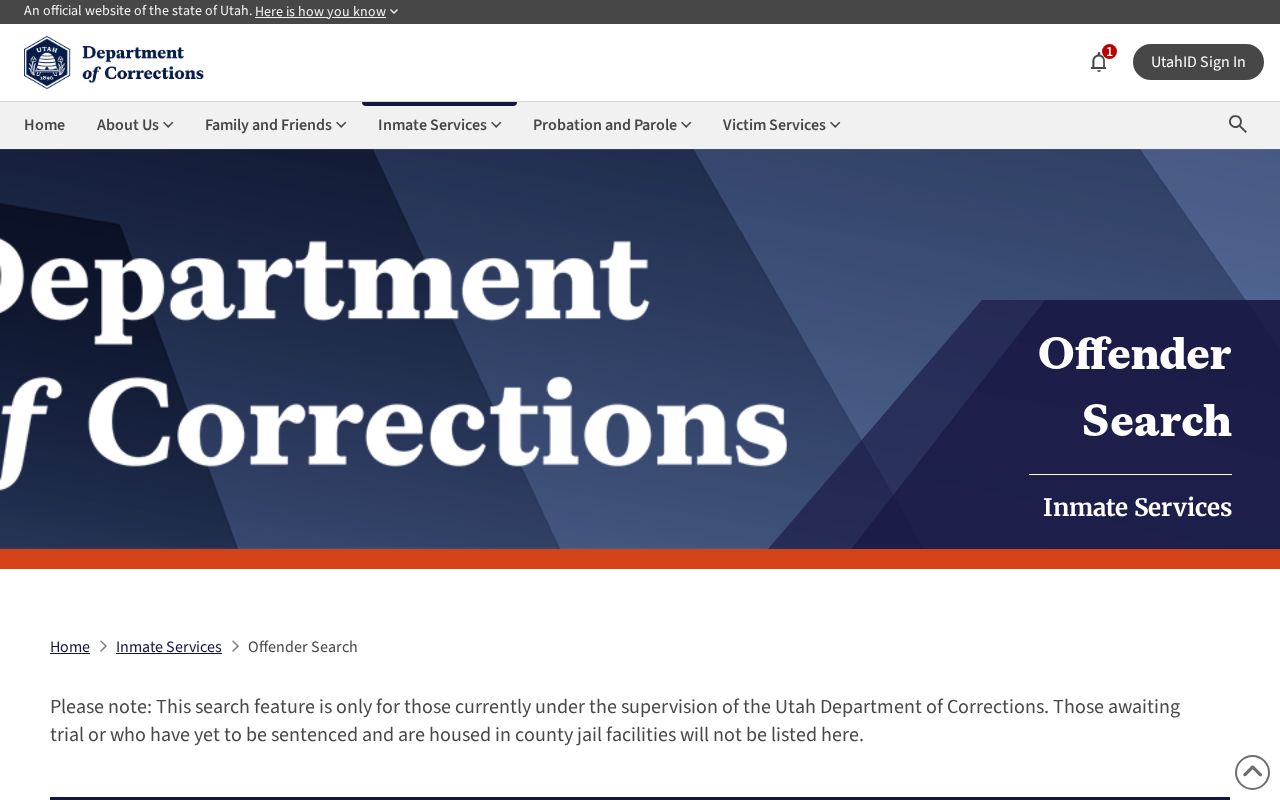
The notice explains why this state tool cannot supply a projected date for someone awaiting trial at the Wasatch County Jail.
Note: Copy the exact Release Date/Type value instead of replacing the agency’s label with an unsupported estimate.
Board Dates for Wasatch County Release
Utah often uses indeterminate felony sentences. The court imposes a range, while the Utah Board of Pardons and Parole makes release decisions within its statutory authority. The Board’s Hearings and Decisions search accepts a name, offender number, or date range. A person query can reveal a scheduled hearing and prior public decisions tied to the same UDC number.
Original hearings, rehearing or review, rescission, parole-violation proceedings, and other reviews can affect the date. A granted result or date set is prospective authority. A denial, later review, or deferred result means no immediate parole. Rescission withdraws an earlier action. Read the written decision and its conditions rather than inferring release from a calendar entry.
Utah Code §77-27-7 addresses timing for an original hearing. Section §77-27-9 governs parole authority, minimum terms, and offense or date-specific limits. Neither statute turns a sentence into a simple percentage calculation. Eligibility, authority, and completed movement remain separate questions.
Utah Earned Time for Wasatch Releases
Utah Code §77-27-5.4 requires a UDC and Board earned-time program. Under the law effective July 1, 2026, successful completion of each approved and recommended program provides at least four months of credit for up to two programs. The Board retains discretion for additional credit within the statute.
The credit is not a daily good-behavior rate. It also is not a county jail credit or an automatic share of the sentence. Statutory exclusions include life without parole, an order to expiration, no current release date, an unmet release contingency, and an existing termination date. Credit may be forfeited when a rescission hearing is necessary.
Program completion alone does not establish the new release day. Check the later Board action and UDC Release Date/Type field. A program may be approved, but the person can have another bar or contingency. The Board’s written record resolves whether the credit changed an already ordered date.
Wasatch Jail Sentence Calculations
A county jail sentence uses the signed judgment or commitment and the jail’s own lawful calculation. Relevant inputs can include the start or commitment date, judicial credit for prior confinement, term length, concurrent or consecutive direction, and a later court order. Wasatch County publishes no official county good-time formula and no weekend or holiday early-release rule.
Do not apply the state earned-time statute to a county misdemeanor term. Ask the Wasatch County Jail at 435-657-1619 for the computed date and its legal basis. Then compare the answer with the court record. If the person is one of the state-prison people housed under contract, the UDC and Board path may control instead.
A pretrial detainee has no comparable sentence calculation. The useful records are the bail decision, release order, dismissal, plea, commitment, and any hold from another agency. Even after one judge orders release, a second case or detainer can keep the person in custody or cause a transfer.
Why Wasatch Release Dates Change
A date can move for reasons found in different records. The Board may act again. A court can correct a sentence or enter another order. An unresolved condition may delay physical processing. A receiving agency can take custody even though Wasatch records its own release event.
| Factor | Where to verify | Effect on the date |
|---|---|---|
| Board grant, denial, rehearing, or rescission | Written Board decision | Sets, defers, changes, or withdraws parole authority |
| Earned-time award or forfeiture | Board and UDC record | May alter an already ordered state date |
| Release contingency | Board decision and case record | Can prevent release until the condition is met |
| New or corrected sentence | Signed court order | Can change the controlling term or credit |
| Concurrent or consecutive direction | Judgment and commitment | Changes how multiple terms combine |
| Hold or detainer | Jail transaction and receiving agency | May turn local release into continued custody elsewhere |
The source of the change matters. Jail staff can confirm physical processing. The court explains a sentence or order. The Board controls state parole decisions, while UDC records the current location and supervision data. Preserve all source dates when they disagree.
Wasatch Release Dates Have No 85% Rule
No reviewed Utah source supports a universal rule that a state prisoner serves 85 percent of a sentence. Utah’s distinctive path combines an indeterminate sentence, a Board decision, statutory minimum limits, release conditions, and program-based earned time. Importing a federal rule or another state’s formula would produce an unsupported Wasatch County date.
Likewise, Wasatch County does not publish a local good-time rate that can be entered into an online calculator. The county date must come from the commitment and the jail’s calculation. The state date must come from the Board and UDC. This difference is more than administrative because the jail also houses some UDC people under contract.
Ask one question before doing any math: who owns the sentence? If the answer is Wasatch County, use the court and jail. If it is UDC, use the Board decision and state search. If another agency placed the hold, trace the receiving custodian. A correct agency path is more reliable than an estimated percentage.
Confirm a Wasatch County Release Date
Utah VINE can send a custody-change notice and, for UDC events, may send an advance parole-release-date notice 30 days before release. The VINELink inmate search and notification process can help track that event. VINE remains a notice system, not the legal decision maker, so match the event to the custodian and authority.
UDC says state releases and paroles are processed on Tuesdays, with almost all completed at the Utah State Correctional Facility. Direct release of a UDC person from a county jail is extremely rare. This Tuesday process does not apply to routine Wasatch bond-outs or county sentence releases.
The official UDC release-day source below explains the state location and Tuesday processing rule.
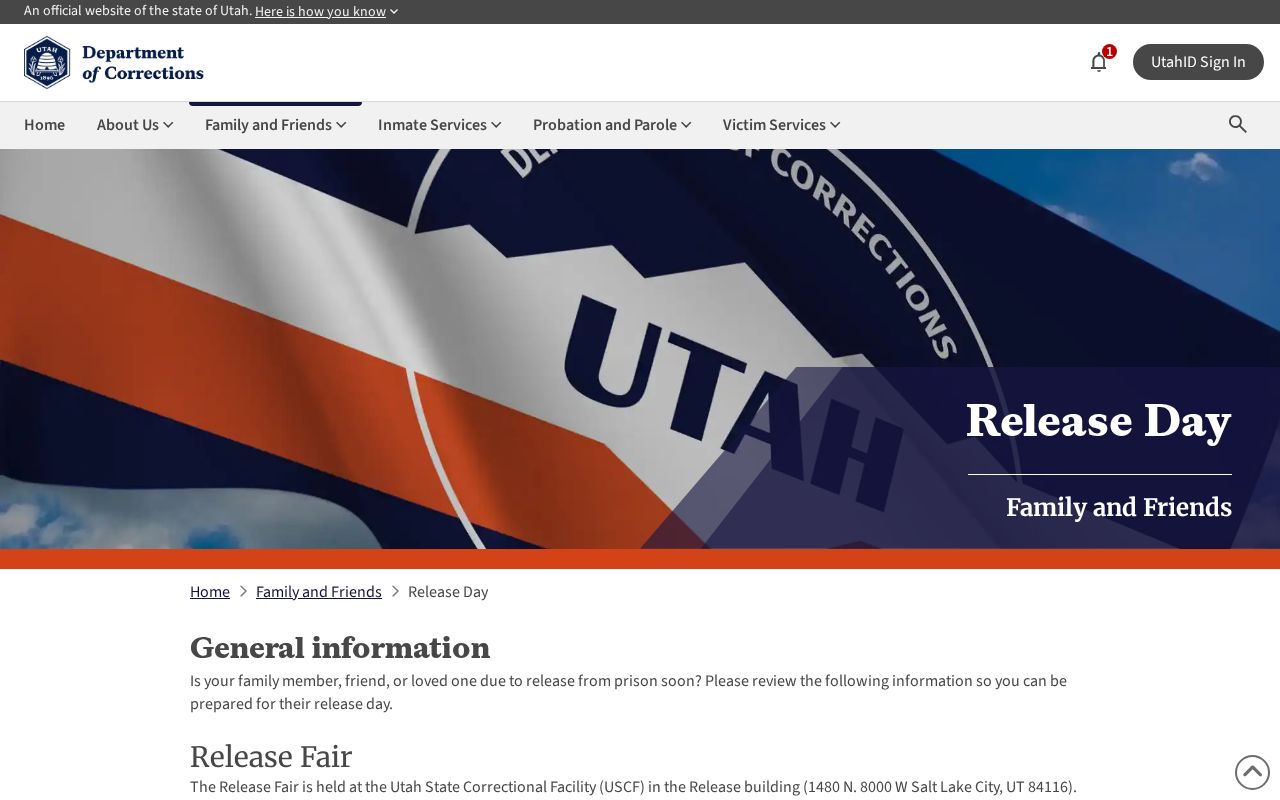
It helps families avoid waiting at the Wasatch County Jail when UDC has directed the person to be processed at USCF in Salt Lake City.
On the expected day, check UDC location and supervision, the Board record, and the VINE event. For a county release, call the jail and obtain the actual timestamp. A completed event should always replace the earlier forecast in any personal record.